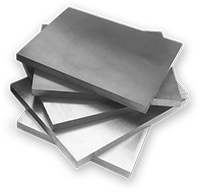
Molybdenum
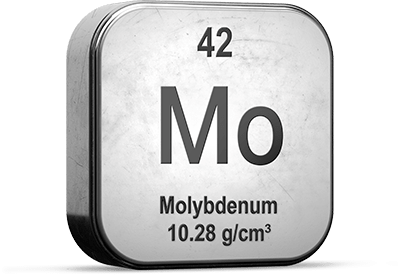
Molybdenum Alloy
Purchase price: —
Molybdenum Alloy – Properties, Advantages and Applications
Molybdenum alloys are high-quality metallic materials consisting primarily of molybdenum (Mo) and other alloying elements. They are characterized by high temperature resistance, good mechanical strength and a low coefficient of thermal expansion. Due to these properties, molybdenum alloys are used in high-temperature technology, aerospace, metalworking, mechanical engineering and plant engineering.
Molybdenum belongs to the group of refractory transition metals and has a melting point of approximately 2623 °C. By adding elements such as titanium, zirconium, rhenium or lanthanum, certain properties can be specifically improved. Well-known materials include TZM (molybdenum-titanium-zirconium), molybdenum-rhenium alloys and lanthanum oxide-strengthened molybdenum.
Properties of Molybdenum Alloys
Molybdenum alloys offer high strength at elevated temperatures and good thermal stability. Their density and mechanical properties depend on their specific chemical composition.
The TZM alloy is characterized by improved high-temperature strength and creep resistance compared to pure molybdenum. Molybdenum-rhenium alloys can exhibit higher ductility and better workability.
Molybdenum alloys can oxidize at high temperatures in oxygen-containing atmospheres. Therefore, they are frequently used in a vacuum, under a protective gas atmosphere or with suitable protective coatings.
Industrial Uses
Molybdenum alloys are used to manufacture furnace components, heating elements, tools and highly stressed structural elements. They are particularly sought after in high-temperature technology due to their strength and dimensional stability.
In the aerospace industry, they are used to manufacture specialized temperature-resistant components. They are also used in the electronics industry, vacuum technology and the production of tools for hot forming.
Advantages of Molybdenum Alloys
- High temperature resistance
- Good strength at elevated temperatures
- Low coefficient of thermal expansion
- Improved creep resistance in suitable alloys
- Good electrical and thermal conductivity
- High dimensional stability under suitable conditions
- Customizable properties through alloying elements
Applications of Molybdenum Alloys
- High-Temperature Technology: Furnace components and heating elements
- Aerospace Industry: Temperature-resistant components
- Metalworking: Tools for hot forming
- Vacuum Technology: Components for vacuum systems
- Mechanical Engineering: Highly stressed structural elements
- Electronics Industry: Electrodes and specialized components
- Toolmaking: Forming tools and die-casting components
- Research: Development of new high-performance materials
Indicative purchase prices excluding VAT in USD/lb. Converted from EUR/kg using the ECB reference rate of 2026-11-04; final USD quotes are confirmed on enquiry.